


Knowing how to choose a marketing agency is one of the more consequential decisions a B2B company will make, yet most procurement processes are surprisingly informal. A wrong hire costs more than the retainer: it delays pipeline growth, misaligns teams, and often requires a second search within twelve months.
This guide is written for marketing directors, heads of growth, and C-level decision-makers at mid-sized and enterprise B2B companies who are actively evaluating agency partners. It does not cover consumer brands or one-off project vendors. The focus is on sustained, strategic engagements in areas such as SEO, paid search, content marketing, and marketing automation — disciplines where misaligned expectations compound over time.
The agency market has expanded significantly. According to industry data, there are now tens of thousands of digital agencies operating across Europe alone, ranging from two-person specialists to global networks. That volume makes differentiation harder, not easier. Credentials, case studies, and award logos have become near-universal, which means surface-level evaluation criteria no longer reliably predict fit or performance.
What does predict a successful engagement is a structured selection process built around four specific dimensions: strategic alignment, capability verification, commercial transparency, and cultural compatibility. Each of these requires deliberate assessment — not gut feeling and a polished pitch deck. The sections that follow walk through each dimension with practical, actionable criteria you can apply before your next agency briefing.
Define Strategic Fit Before Evaluating Capabilities

Most companies approach the question of how to choose a marketing agency by immediately requesting proposals, reviewing portfolios, and comparing service packages. That sequence is backwards. Before you assess what an agency can do, you need to establish what your business actually requires from a marketing partner — and those two things are rarely the same. Strategic fit means that an agency’s operational model, client philosophy, and growth trajectory align with your organisation’s goals, internal structure, and decision-making process. Without that alignment, even a technically excellent agency will underdeliver, because the working relationship will constantly generate friction instead of output.
To define strategic fit concretely, start by mapping your internal marketing capability. If your company has a 12-person marketing team that handles content, analytics, and paid channels in-house, you need an agency that integrates into that structure as a specialist layer — not one that expects to own your entire channel mix. Conversely, if you’re a 50-person B2B SaaS company with two marketers focused primarily on product launches, you need an agency that can function as an operational extension, taking genuine ownership of execution. Document this honestly before your first agency conversation. Agencies that are right for the first scenario typically have strong collaboration frameworks, dedicated account leads, and experience working alongside internal teams. Those suited to the second often have broader service coverage, more standardised processes, and pricing structures built around retainer relationships rather than project scope.
Industry familiarity is another dimension of strategic fit that gets underweighted during agency evaluation. This is not about finding an agency that has worked in your sector — it’s about finding one that understands your buyers’ decision-making process. B2B technology purchases involving five or more stakeholders and an average sales cycle of six to nine months require a fundamentally different marketing approach than a transactional B2B product with a two-week close. An agency that has built pipeline programmes for enterprise software companies understands procurement dynamics, long-form content strategy, and multi-contact attribution in ways that an agency specialising in e-commerce or direct-to-consumer work simply does not, regardless of how strong their general capabilities are. Ask for specific examples: how many leads generated, what conversion rates at which funnel stage, and how results changed over a 12-month engagement.
Finally, consider organisational scale and growth stage. A 500-person global agency and a 15-person specialist firm can both be excellent choices, but they serve different needs. Larger agencies offer more redundancy, broader tooling access, and established processes for managing international markets across time zones and languages — relevant factors if your company operates across EMEA or runs campaigns in three or more languages simultaneously. Smaller agencies typically offer more direct access to senior talent and faster decision-making cycles, which matters significantly when market conditions shift and campaign strategies need to be adjusted in weeks rather than quarters. Neither model is inherently better; the right choice depends on where your company sits today and where it needs to be in 24 months. Defining these parameters is the foundation of any serious agency evaluation checklist.
How to Verify Agency Capabilities Beyond the Case Study

Case studies are, by design, an agency’s greatest hits compilation. They show the campaigns that worked, the clients who stayed happy, and the results that happened to align with what the agency does best. That is not dishonest — it is simply how presentations work. The problem arises when B2B buyers treat case studies as evidence of consistent capability rather than selective proof of occasional excellence. When you are evaluating how to choose a marketing agency for a serious commercial relationship, you need to look at what sits behind the highlight reel. Start by asking for work samples from accounts that ended, not just active ones. Agencies with genuine confidence in their process will not hesitate to show a campaign that delivered modest results alongside a full explanation of what was learned and adjusted. Reluctance to do so is itself diagnostic.
References are the most underused tool in agency evaluation, primarily because buyers ask the wrong questions. Instead of asking whether the agency was pleasant to work with or delivered on time, ask the reference contact how the agency handled a situation where results were below target — what did they communicate, how quickly, and what did they change? Ask whether the team that pitched the account was the team that actually worked on it. In B2B contexts, this discrepancy is common: senior strategists close the deal, then junior staff run the execution. Ask what the realistic onboarding period looked like and whether the agency accurately forecast how long it would take to see measurable progress. If a reference mentions that meaningful pipeline impact took nine or ten months rather than the three months originally discussed, that is not necessarily a red flag — but it is information you need before signing a contract, not after month six.
Financial and operational transparency is another legitimate part of the agency evaluation checklist that most buyers skip entirely. Asking an agency how they are structured — retainer, project, performance-based, or a hybrid — tells you something about how their incentives align with yours. An agency paid purely on a retainer with no performance component has no structural reason to push for measurable outcomes. Equally, an agency working on pure performance fees may chase short-term conversion metrics at the expense of brand positioning work that takes longer to mature. Neither model is inherently superior, but understanding it lets you negotiate terms that create shared accountability. You can also ask about subcontracting: many agencies, particularly in specialist areas like paid media or technical SEO, work with external contractors, and knowing this in advance lets you assess whether the team you are paying for is actually the team doing the work.
Finally, run a small scoping exercise before committing. Offer to pay the agency a fixed fee — something in the range of €1,500 to €3,000 is reasonable — to produce a preliminary audit or strategic brief for one specific problem you are facing. This is not about getting free work; it is about observing how the agency thinks under real conditions. The quality of questions they ask during that exercise, the speed at which they orient to your industry context, and the usefulness of their output will tell you far more than any credential or case study format ever could.
Assessing Commercial Transparency and Contract Terms
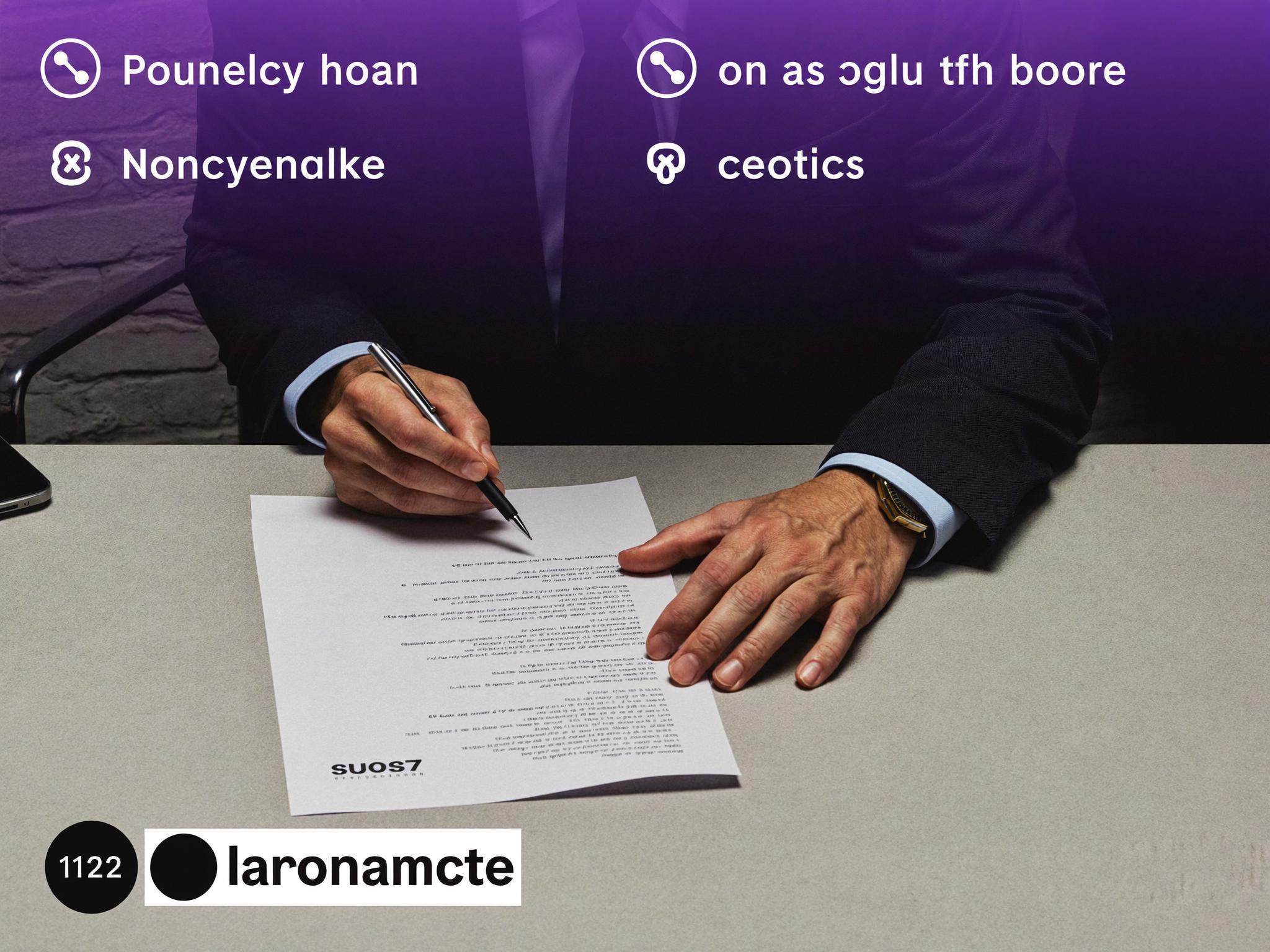
When working through your agency evaluation checklist, pricing transparency is one of the clearest indicators of how a future partnership will actually function. Agencies that obscure their fee structures during the sales process rarely become more straightforward once a contract is signed. Ask for a written breakdown of every cost component before any agreement moves forward: retainer fees, project-based charges, media spend markups, platform licensing costs, and any third-party supplier fees the agency passes through. A reputable agency will provide this without hesitation. If you encounter vague line items like “operational overhead” or “campaign support” without clear definitions, treat these as a signal worth investigating rather than accepting at face value.
Contract terms deserve the same level of scrutiny as pricing. Standard agency agreements typically run 6 to 12 months, which is reasonable given that meaningful B2B results take time to materialise. However, you should negotiate specific exit provisions from the outset. A 90-day written notice clause is a commonly accepted standard, but some agencies push for 180-day lock-ins or automatic renewal clauses that activate if you miss a narrow cancellation window — sometimes as short as 30 days before the contract end date. Intellectual property ownership is another clause that frequently catches clients off guard: establish clearly in writing that all deliverables, including creative assets, campaign data, ad account access, and developed content, transfer fully to your company upon termination. Some agencies retain ownership of accounts built on their own platform logins, which can leave you starting from zero if you switch providers.
Performance metrics and reporting commitments should also be codified in the contract rather than left as informal promises made during the pitch. Specify the reporting cadence — weekly dashboard access, monthly written reports, quarterly strategic reviews — and define exactly which metrics will be tracked. For B2B campaigns, this typically means cost per qualified lead, pipeline contribution, and marketing-influenced revenue, not just impressions or click-through rates. If an agency resists putting reporting standards into the agreement, that resistance tells you something about their confidence in delivering measurable outcomes. Knowing how to choose a marketing agency well means recognising that accountability should be structural, not voluntary.
Finally, consider how the agency handles scope changes and additional work requests, since these are where many client relationships quietly deteriorate. Vague contract language around “additional services” can result in unexpected invoices or, conversely, refusals to assist with reasonable tasks that fall slightly outside the original brief. Ask the agency to walk you through a hypothetical scenario: if your team requests a landing page revision mid-campaign or needs an additional ad variant tested, how is that scoped and billed? The answer, and the speed and clarity with which it is given, reveals a great deal about how the agency manages client relationships operationally. Clear change-order processes, documented response time commitments, and named account contacts are not bureaucratic details — they are the foundation of a partnership that can function reliably over a multi-year engagement.
Cultural and Operational Compatibility: Why It Determines Long-Term Performance

Most marketing agency selection criteria focus on capabilities, pricing, and past results — and those factors matter. But companies that have worked with agencies across multiple markets consistently report that cultural and operational fit determines whether a relationship actually delivers over 12, 24, or 36 months. A technically strong agency that operates on a fundamentally different communication rhythm, decision-making style, or accountability structure will generate friction that erodes output quality far more than any skill gap would. This is especially relevant for B2B companies working internationally, where misaligned expectations around response times, escalation paths, or reporting depth can quietly derail campaigns before they ever gain traction.
Operational compatibility covers more concrete factors than most clients think to evaluate during the selection process. Consider time zones and their practical effect on turnaround: an agency eight hours ahead of your core team means that a feedback cycle requiring two exchanges can consume four calendar days instead of one. For campaign launches, product announcements, or crisis response, that difference is measurable. Similarly, ask how the agency structures its internal handoffs — does a single account lead hold continuity across strategy, creative, and media, or does your brief pass through three departments with no central point of accountability? Neither model is inherently superior, but understanding which one you are buying into before you sign a contract prevents the most common source of mid-engagement frustration. When learning how to choose a marketing agency for B2B work specifically, these structural questions deserve as much attention as the portfolio review.
Cultural compatibility is harder to audit but equally important, particularly when the agency will represent your brand in markets or languages you do not directly manage. A European industrial supplier expanding into North American manufacturing markets needs an agency that understands both the technical language of the sector and the directness that characterizes B2B communication in that region — not an agency that will soften messaging to fit a consumer advertising sensibility. During evaluation, it is worth presenting a realistic scenario: a campaign brief with a tight deadline, a conflicting internal stakeholder position, and an unclear success metric. How the agency navigates that conversation tells you more about working compatibility than any credentials deck will. Agencies with genuine B2B experience will push back constructively; those without it will either comply without comment or propose a solution that sidesteps the actual problem.
One practical element of your agency evaluation checklist should include a structured reference check that goes beyond the standard two or three contacts a prospective agency provides. Ask specifically for a client whose engagement ended — not because it failed, but because the project concluded. How an agency manages offboarding, knowledge transfer, and documentation reflects the same operational discipline that determines day-to-day performance. The best marketing partner relationships are built on processes that work when things are complicated, not just when conditions are favorable. Compatibility in that sense is not about personal rapport, though that helps — it is about whether both organizations are structured to solve problems the same way when the stakes are real.
Conclusion
Choosing the right marketing agency is ultimately a risk management exercise — and the companies that treat it as one consistently get better outcomes. By approaching the selection process with the same rigour you would apply to any significant business investment, you dramatically reduce the chances of costly misalignments, wasted budgets, and missed growth targets. The B2B landscape is too competitive, and the stakes are too high, to leave this decision to gut feeling or a polished sales deck.
Throughout this guide, we have covered the core pillars of a sound agency selection process: defining your goals before you start searching, evaluating sector experience and strategic capability, scrutinising case studies and references, assessing cultural fit alongside technical competence, and stress-testing commercial terms before you sign anything. No single factor will give you the full picture, but taken together, these criteria give you a structured framework that removes much of the guesswork. The agencies that consistently deliver results for B2B clients are rarely the loudest in the room — they are the ones that ask the sharpest questions, demonstrate clear thinking early, and set expectations honestly from day one.
If your business is at the stage where choosing the right marketing partner could genuinely accelerate growth, investing proper time into this process is non-negotiable. The right agency will not just execute campaigns — they will become a strategic extension of your team, contributing to decisions that shape your market position for years to come.
Questions about this, or a topic you’d like us to cover? Feel free to reach out. 🚀